

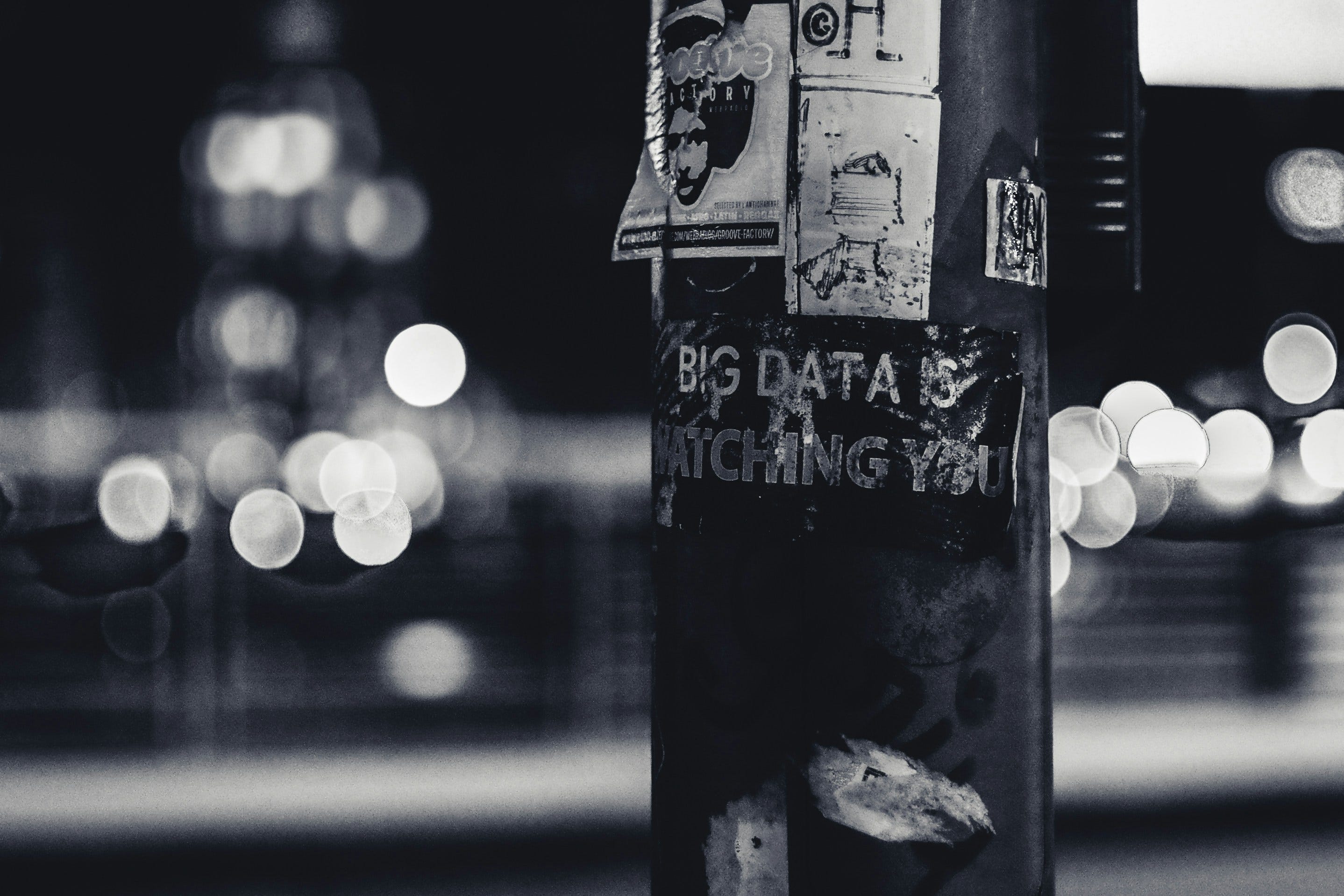
At its inception, many believed AI would make life easier and more efficient for all of us. Now, most of America believes it has been sold a bill of goods. As the technology proliferates at a breakneck pace, with little transparency, debate, or regulation, we are learning that data centers suck up electricity, water, and land. In order to succeed, AI must steal intellectual property–writing, art, and ideas–without even an offer of remuneration. And at the end of the day, AI will turn around and dramatically disrupt American labor as we know it, leaving many jobless and wrecking entire economic sectors.
Meanwhile, AI is also dramatically reshaping how we are surveilled, policed, and prosecuted. At a time when the tools of policing are already utilized against protestors, immigrants, and political opponents, the unchecked spread of AI should terrify everyone who does not hold an ironclad grip on power.
In this newsletter, we focus on the dangers AI poses to our privacy and safety if left unregulated and unchecked. But there is also a through-line between the righteous anger growing across America against AI companies, and the lengths to which the government is surveilling, criminalizing, and suppressing dissent against the growth of AI. That too is what this newsletter will explore–how committed the government is to protecting its investment in the surveillance of the future.
AI is the lifeblood of ICE’s immigration enforcement.
A few months ago, we warned about the world that ICE’s AI-assisted surveillance behemoth was creating–one in which abduction and deportation decisions flowed from hidden outputs that individuals could not see, challenge, or trace. Since then, ICE’s arsenal has only expanded, and the dragnet includes not only immigrants, but also anyone this government decides are “extremists.”
State and local officials are also relying on it to surveil, arrest, and sentence people, often with little to no guardrails in place.
State and local police departments are rapidly adopting “data fusion” platforms powered by AI. These systems fuse license plate readers, facial recognition, social media, public records, gunshot alerts, and body camera footage into a single system that generates risk scores, threat assessments, and relationship maps. Law enforcement’s unregulated reliance on such AI technology, however, has already created a slew of problems, including wrongful arrests, inaccurate police reports, and life-endangering police encounters.
Local police are using AI surveillance networks. Cities are rapidly deploying AI-powered camera networks, drones, and license plate readers with little public oversight. Data collected by systems like Flock has been shared with ICE and data brokers without individuals’ knowledge, and at least 30 cities have ended Flock contracts after discovering unauthorized federal data sharing.
Police are using AI to write police reports. Police departments are adopting AI tools to draft reports from body camera footage despite evidence that the technology undermines accuracy. This practice also threatens the ability of those accused of crimes to contest AI-generated accounts used against them.
Governments are not only deploying AI, but are using every tool they have to ensure they have more of it.
AI protest is now an “extremist threat.”
With 7 out of 10 Americans opposed to data centers, governments are taking action to stop dissent. Even peaceful protestors may find themselves falling under the purview of the President’s NSPM-7 Memo, which targets organizations it perceives as espousing “anti-Americanism, anti-capitalism, and anti-Christian [views].”
That possibility is not hypothetical: According to a Wired investigation, the FBI is already quietly scouring social media platforms to track the online activity of AI skeptics under the guise of combatting domestic extremism. As one of the multiple reports in the investigation makes clear, law enforcement agencies like the NYPD Intelligence Bureau, a frequent collaborator with the FBI, are including in their “intelligence” briefings warnings about “[t]he chaotic atmosphere that may result from emergent AI technology,” which could “fuel large-scale protests.”
This report should serve as a red flag for all those who want to protect the right to dissent: law enforcement and federal agencies have a long track record of weaponizing purported crime-fighting missions to surveil peaceful activities.
State intelligence bureaus are building their own anti-tech threat categories, and local police are making the arrests.
The Northern Virginia Regional Intelligence Center has built out a parallel framework warning that “AGAAVEs” (anti-government, anti-authority violent extremists) have begun targeting data centers, while listing suspicious indicators so broad they could describe peaceful protest — “expressed/implied threat,” “observation/surveillance,” “photography.”
The Intercept just obtained a law enforcement document from Philadelphia that combed through anti-AI social media posts and warned of “disruptive First Amendment activity.”
According to Data Center Watch, state and local police in California, Illinois, Indiana, New Jersey, Oklahoma, and Wisconsin have removed or arrested speakers at town halls who criticized data centers – at least one case before the speaker was even allowed to begin.
Because domestic terrorism isn’t a standalone federal charge, protesters surveilled under extremism provisions typically end up charged with local offenses like criminal trespass, vandalism, or disorderly conduct, which makes it difficult to track the surveillance lens.
Fighting Back Against AI
The Pope just joined the resistance. On May 25, 2026, Pope Leo XIV released a 42,300-word encyclical, “Magnifica Humanitas,” calling for AI to be “disarmed” and warning about labor displacement, misinformation, environmental damage, and the concentration of power among a handful of AI companies.
Students are pushing back on campus. Graduates booed AI-boosting speakers at at least three May 2026 commencements — prompting Vice President JD Vance to address growing anti-AI sentiment at the Air Force Academy — while students are organizing anti-AI groups at universities.
As grassroots resistance to data centers gains momentum, legislators have been forced to take notice: lawmakers from Newberry, South Carolina to Seattle, Washington to New York State are imposing data center moratoriums; states like North Carolina and Tennessee are requiring data centers to front the increased costs of operation; and Monterey Park, California has now banned data centers altogether.