
Jim and Jane Crow's Return
A Wren Collective Newsletter on Federal & State Retrenchment on Racial Justice


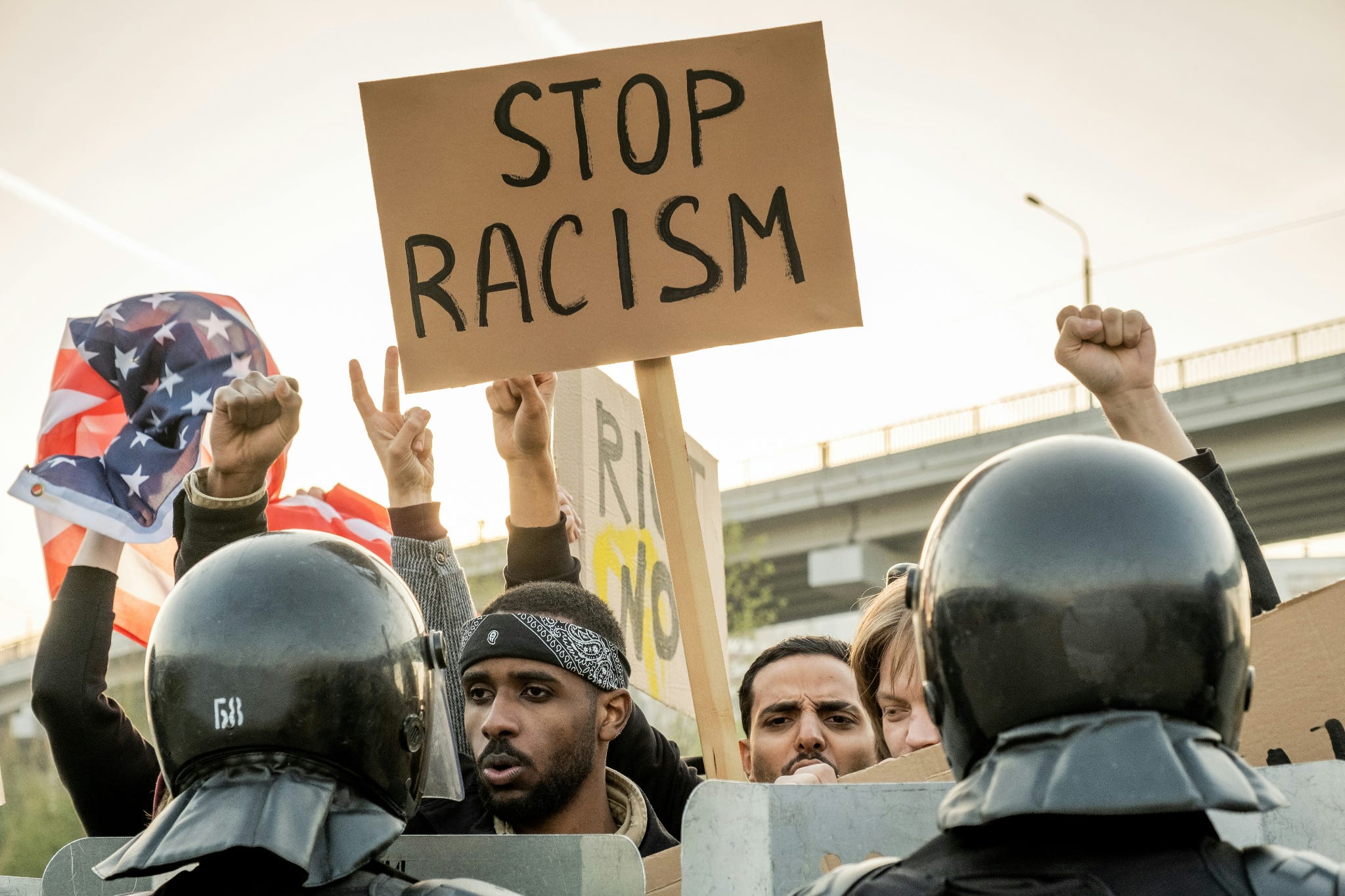
The United States stands on a precipice where the administration is systematically dismantling institutions designed to protect civil rights and weaponizing them against those fighting for equity. From the Supreme Court gutting our bedrock voting protections to the Department of Justice targeting civil rights organizations, the hard-won gains of the Civil Rights movement are being erased.
Meanwhile, agencies like the Equal Employment Opportunity Commission (EEOC) -- once champions of marginalized Americans -- have pivoted to investigating whether diversity initiatives somehow harm white employees. The message is clear: those demanding racial equity are now cast as the enemy, while courts and bureaucrats feign blindness to overt racism when it serves the interests of power.
In today’s newsletter, we highlight the continuing Federal, State and Judicial onslaught against racial equity and the embrace of white supremacy. As always, good people are tirelessly fighting back and imploring us to recognize and embrace our shared humanity.
Hollowing Out the Voting Rights Act
Last week, the Supreme Court delivered what may be a final death blow to the Voting Rights Act. Louisiana v. Callais gutted Section 2 of the VRA, a critical shield against this country’s longstanding practice of diluting Black voting power.
Fighting Electoral Racism: Why Section 2 Matters. When tools such as literacy tests and poll taxes were no longer available, state legislatures turned to electoral maps and at-large election systems as a new means to silence Black voters. They cloaked their strategy in race-neutral language and justifications, making it nearly impossible to prove intentional discrimination. But Section 2 recognized the coded approach of most racism and allowed Black voters to challenge the discriminatory effects of a districting scheme.
The Contested Louisiana Map. In 2020, Louisiana lawmakers drew a congressional map where only one district out of six held a Black majority, despite Black citizens making up a third of the state’s population. Lower courts rightly found this practice violated Section 2, resulting in a remedial map that produced a second majority Black district.
The Supreme Court Just Gutted Section 2. The Roberts Court has long shown an animus to the concept of a multi-racial democracy, working instead to recreate Jim Crow under the guise of color blindness. Not only did the majority rule the new map unconstitutional, it “ convert[ed] Section 2 into its opposite-a statute turning on discriminatory intent, not effects.” Plaintiffs must now prove that electoral rules were adopted with racially discriminatory intent, the actual effect is immaterial.
The Future of Electoral Politics. Those who believe that only white voices matter will now face far fewer obstacles in drawing electoral maps. Congressional seats, state legislatures, and school boards may soon be lily white. As stated in Justice Kagan’s dissent, “minority voters can now be cracked out of the electoral process.”
We’re Already Seeing the Impacts. Kagan’s words are not theoretical; Southern states are now racing to gerrymander and redistrict Black voters out of existence. Louisiana outright suspended a primary election in which 100,000 voters had already cast early votes and 42,000 voters had submitted absentee ballots–just so the state could have time to draw up its new Jim Crow map.
Not Just Black Voters; Black Politicians Too. Callais both reflects and encourages a national effort to oust Black Americans out of political life. Just yesterday, the FBI raided the offices of Sen. Louise Lucas, who herself was once a victim of a racial gerrymander and fought against those tactics by championing Virginia’s recent redistricting efforts. And in Louisiana, state politicians would rather eliminate a political position altogether than allow Calvin Duncan to take office (unfortunately, déjà vu).
Those Demanding Racial Equity are the Real Enemies
Trump and his sycophants are not only refusing to combat white supremacy, they’re actually attacking anti-racism and labeling it the real problem. The Department of Justice’s recent decision to indict the Southern Poverty Law Center (SPLC) for using informants to infiltrate white supremacist organizations signals a new low and likely presages danger for other anti-hate groups. The indictment–and DOJ’s claim that SPLC is “manufacturing racism to justify its existence”–reiterates to white supremacists that the DOJ will protect them at all costs, and represents yet another attack on groups advocating for racial equity.
Attacks against civil rights groups are also occurring at the state level:
Florida, not to be outdone in the facism department, has now opened up its own investigation into SPLC; it is likely not coincidental that the states is doing so just as it has complained about the group’s efforts to fight the state’s new congressional maps.
Louisiana recently passed legislation targeting immigrant rights groups, specifically threatening felony prosecutions against anyone who “hinders” ICE. Fearing prosecution, Louisiana-based Immigration Services and Legal Advocacy paused its Know Your Rights training series.
South Carolina Attorney General Alan Wilson recently demanded years’ worth of membership lists, meeting minutes, and donor records from several Islamic and Palestinian-based non-profits. Wilson’s intimidation efforts are eerily reminiscent of Jim Crow efforts to compel NAACP member lists during the Civil Rights movement.
The governors of Texas and Florida issued orders purporting to designate the Council on American-Islamic Relations (CAIR), the nation’s largest Muslim civil rights group, as a terrorist organization. These measures potentially subject the organization and its supporters to a range of consequences, such as restrictions on land sales and loss of government contracts.
The U.S. Equal Employment Opportunity Commission, Champion for White Men
It has become increasingly clear that the EEOC has retreated from its historical role as an enforcement mechanism of the Civil Rights Act. Rather than protecting marginalized groups, the EEOC has pivoted to protecting the privileged.
Eliminating Key Protections. EEOC leadership has curtailed the pursuit of sexual orientation and gender identity cases and stepped back from disparate-impact enforcement—long a core tool for addressing structural discrimination.
Attacking Anti-Racist Programs and Policies. At the same time, the EEOC has intensified its focus on scrutinizing corporate DEI programs, including investigations into whether such initiatives discriminate against white employees.
Vindicating White Grievance. Consistent with this troubling trend, internal accounts appear to confirm that claims of discrimination against white men are being “fast-tracked.” Just yesterday, the EEOC filed a suit against the New York Times for allegedly discriminating against a white male editor by failing to promote him.
I’m Putting My Head in the Sand, Don’t Talk to Me About Racism
A recent Supreme Court oral argument perfectly illustrated the majority’s approach to race: pretend even the most egregious attacks on Black and Brown communities are not actually racism, while making policy that plunders those same communities. The argument addressed whether Trump can remove 350,000 Haitians and 6,000 Syrians with Temporary Protected Status. Despite strong evidence of a discriminatory purpose (Trump called Haiti a “shithole country” and claimed immigrants were “poisoning the blood”), the conservative justices and Solicitor General feigned ignorance, claiming that without a racial epithet, there was no evidence of ill intent.
Profiles in Courage:
People are Rising Up Against the Racist Power Grabs.
Angie Nixon used a bullhorn to call-out her fellow Republicans, characterizing the Florida redistricting effort spearheaded by Governor DeSantis as a “slap in the face of voters everywhere.”
Hundreds of protestors headed over to the Tennessee Capitol to oppose Memphis’ Jim Crow map; in turn, Democratic lawmakers, journalists, and constituents were expelled out of the room as senators voted on the map.
Preserving Black History. The HBCU Radio Preservation Project is working to archive audio-visual black history because as the project’s assistant director notes, “in this moment, [when] cultural institutions…are losing funding, we needed to show up and show out and celebrate in a way that was public.”
Resisting Trump-Era’s Cruel Immigration Policies. Another federal appeals court just joined the second circuit’s rejection of a Trump policy that mandated mass no-bond immigration detentions.